About us
The story
Vertical-axis wind machines are among the oldest forms of wind technology, with documented examples dating back more than a thousand years. In 1887, Scottish engineer James Blyth built the world’s first electricity-generating wind turbine, and in 1891 the first vertical-axis wind turbine to generate electricity, lighting his home at Marykirk. From 1895, an improved version of his design supplied emergency power to a hospital in Montrose for 27 years.
Modern VAWT development accelerated in the 20th century with the work of Georges Darrieus, yet challenges around efficiency, self-starting and control continued to limit their performance.
Maarten, Eric and Rob believed that modern engineering, combined with a novel approach to blade control and turbine architecture, could overcome many of these longstanding challenges. That belief became BLOwN Turbines.
Their ambition was to develop a new form of wind energy that could operate efficiently at relatively low heights, capture wind from any direction and generate power close to where it is consumed. It also had to be scalable, straightforward to install and maintain, and suitable for locations ranging from farms and businesses to remote and off-grid communities.
Sustainability was central to the design. The aim was to minimize material use, avoid complex composite materials wherever possible, maximize recyclability and reduce environmental impact throughout the turbine’s life. Low rotational speed, quiet operation and limited visual impact were equally important.
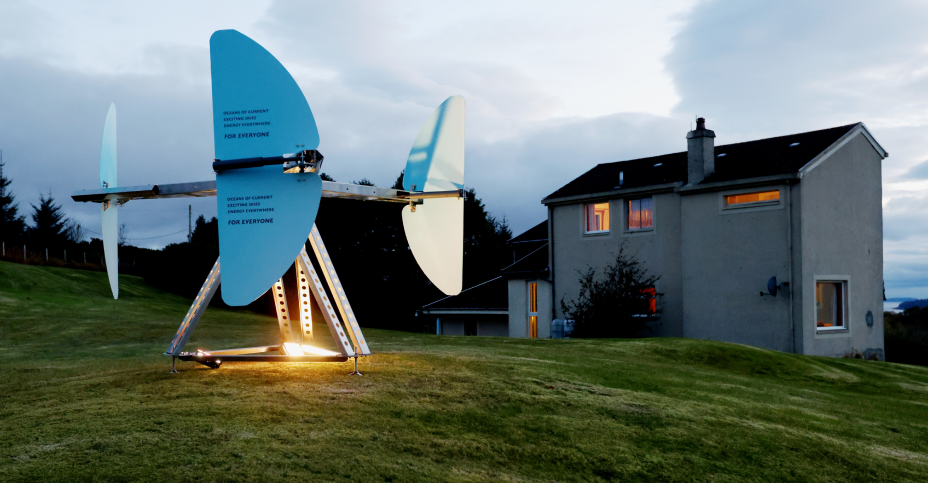
Years of engineering, modeling, prototyping and testing have resulted in the BLOwN cycloidal vertical-axis wind turbine technology, combining automatic variable blade control with a fundamentally different approach to capturing energy from the wind.
The objective remains unchanged: to make clean, locally generated energy available in more places, to more people.
Why BLOwN?
BLOwN does what the wind does, and its five letters pay tribute to the people behind the technology.
B · Bernoulli
Daniel Bernoulli (1700 to 1782). Mathematician and physicist, born in Groningen in the Netherlands. His principle links the speed of a moving fluid to its pressure, and it sits at the heart of how sails and wings generate lift.
L · Lorentz
Hendrik Lorentz (1853 to 1928). Dutch physicist and Nobel laureate. The Lorentz force describes how a magnetic field acts on a moving electric charge, the principle every generator relies on. He also led the committee that calculated how the Afsluitdijk, the Netherlands’ great sea barrier, would change the tides.
O · Ohm
Georg Simon Ohm (1789 to 1854). German physicist whose law linking voltage, current and resistance underpins every electrical circuit, including the one that carries our power to you.
w · Watt
James Watt (1736 to 1819). Scottish engineer, born in Greenock, whose improvements to the steam engine helped power the Industrial Revolution. The unit of power, the watt, carries his name.
N · Newton
Isaac Newton (1643 to 1727). English physicist and mathematician whose laws of motion explain the forces at work every time the wind pushes against a blade.
So why the lowercase ‘w’?
Scientists explain how the world works. Engineers change what we can do with that knowledge.
Bernoulli, Lorentz, Ohm and Newton gave us the science. James Watt, the engineer among them, turned scientific principles into machines that transformed the world. That’s why his letter stands apart.
BLOwN follows his lead, turning that science into a new way to harness the wind.
Founders
Maarten van Oeveren
Chief Executive Officer (R&D-1/VA-4)
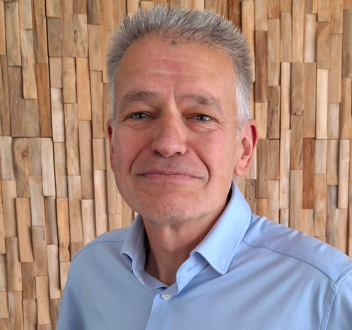
Eric Caron
Chief Technical Officer (R&D-1/ VA-3)
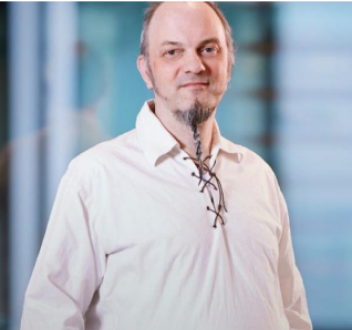
Rob van de Pijpekamp
Sr. Mechatronical Engineer, engineering consultant (R&D-2)
Graduated electrical and automotive engineer. Strong background in mechatronic system research and control, safety and airplane flight controls, automated vehicle controls. Strong in conceptual
thinking and fast forward acting to demonstrate with proof-of-concepts.
Extensively using already existing designs and state-of-the-art concepts. Improving these with out-of-the-box ideas and a broad range of knowledge and skills. Loves to learn by doing.
Together with his wife runs his creative Art-and-Tech business.
The Team
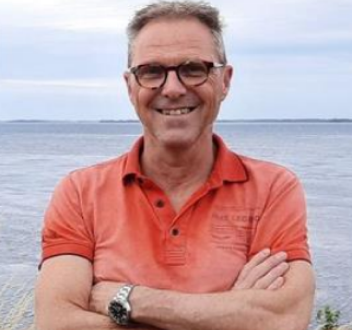
Marijn de Ruijter
Sr. Technical Purchaser (VA-3)
With a to-the-point approach to suppliers, requesting prices and initiating price and quality competition between suppliers. Hands-on and practical approach, not hesitating to call, visit or offer ideas for better manufacturability.
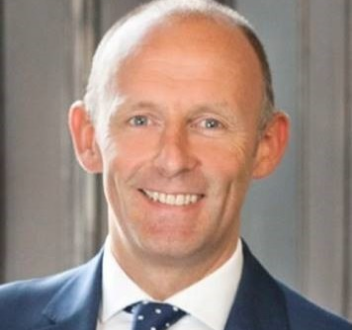
Andy Rogerson
Director, focussing on Strategic Partnerships, People and Performance
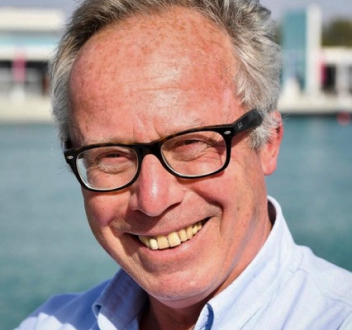
Andrew Pindar OBE
Advisory Board Member

Roderick Roodenburg
Designer
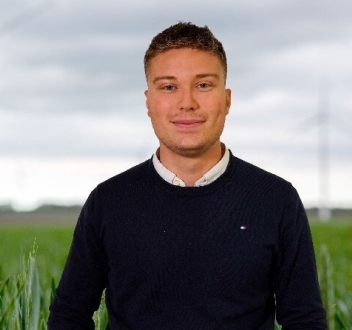
Martijn Hage
Graphic Designer
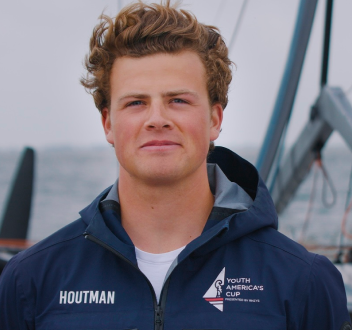
Scipio Houtman
Olympic Sailor, Clean Sailor ambassador
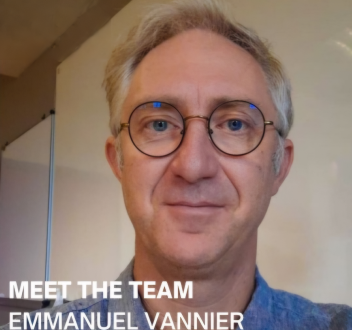
Emmanuel Vannier
Point of Contact New Zealand
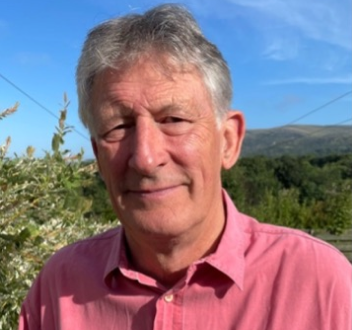
Ian Nimmo
Board member